
Examining how chance influences entertainment experiences unveils intriguing aspects of user engagement. Interactive activities often rely on elements that surprise and captivate participants, making each session distinct and memorable. Understanding these mechanics allows developers to craft more immersive and compelling environments.
Incorporating unforeseen outcomes into structured play enhances excitement and keeps audiences returning for more. This unpredictability not only stimulates players’ curiosity but also builds tension, making victories feel more rewarding. As such, it plays a pivotal role in retaining interest and expanding the enthusiast community.
Analyzing the integration of serendipity can provide valuable insights into enhancing gameplay dynamics. By mastering the balance between structure and chaos, designers can create an alluring atmosphere that resonates with individuals seeking thrilling experiences. This exploration reveals how embracing uncertainty can elevate traditional frameworks and produce delightful surprises that keep players engaged.
Understanding the Mechanics of Chance in Plinko
The design of interactive activities often relies on serendipity to create excitement and interest. In such environments, players are continually faced with uncertainties, greatly influencing their experience.
When examining how unpredicted outcomes function, one must consider:
- Odds Calculations: These mathematical assessments aid in determining potential outcomes, allowing players to estimate their likelihood of success with various strategies.
- Game Design: The architecture of a game determines how the unpredictable factors are integrated. Designers aim to strike a balance that maintains engagement without overwhelming the player.
- Player Psychology: Understanding how individuals react to uncertainty informs the creation of appealing experiences. Human nature often compels players to take risks, influenced by the anticipation of rewards.
- Unpredictability: This element sustains interest by ensuring that no two experiences are alike. Participants may feel compelled to return, driven by the allure of unforeseen results.
By exploring these facets, one can gain deeper insight into how chance plays a significant role in shaping interactions within this exhilarating environment.
How Random Outcomes Affect Game Strategies
In the context of chance-driven activities, understanding how random results influence decision-making is crucial. Game theory provides a framework to analyze strategic interactions where outcomes rely heavily on unpredictability. By employing mathematical models, players can simulate various scenarios to improve their approaches.
Statistical outcomes help participants evaluate past performances and develop informed strategies. Analyzing the distribution of results can reveal patterns that enhance forecasting. Nevertheless, it is essential to acknowledge that while randomness plays a significant role, strategies must remain adaptable to unforeseen developments.
Players often craft their tactics based on the perceived probabilities of different outcomes. However, relying solely on mathematical predictions can lead to misleading conclusions, as chance can introduce significant deviations from expected values. Balancing strategy with a recognition of randomness can provide a competitive edge.
Evaluating the Odds: Probability in Gameplay
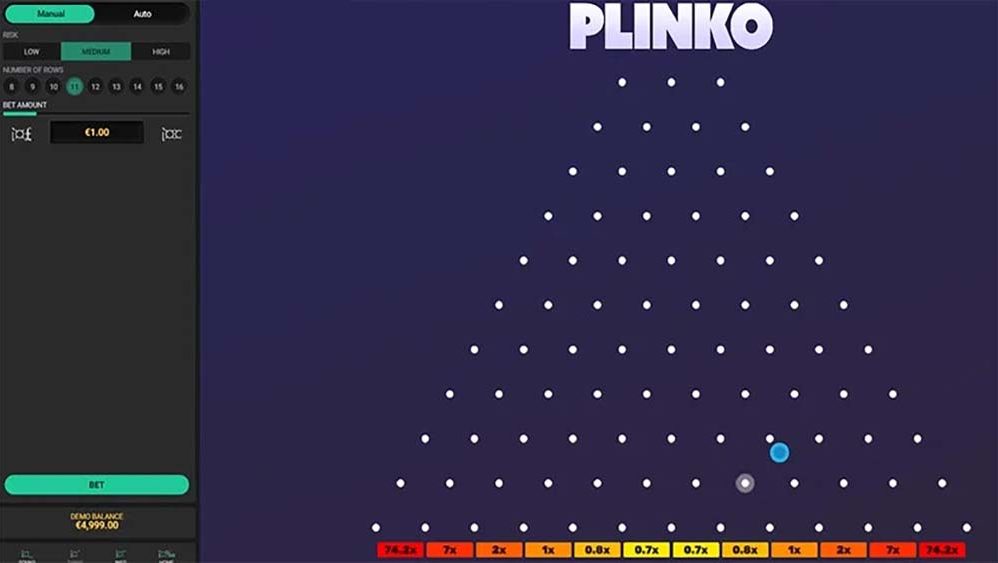
Understanding the odds calculations in various arcade activities requires a dive into mathematical models that govern how outcomes can unfold. Each bounce can lead to a different result, influenced by the inherent unpredictability of falling trajectories and obstacles. This makes engaging in these activities both thrilling and challenging.
The principles of game theory offer insights on balancing risk vs reward. Players often weigh potential gains against the likelihood of success, trying to formulate strategies that consider both the outcomes and probabilities. The design of such experiences aims to provide fair play while embracing the essence of chance.
Statistical outcomes play a significant role in shaping player expectations. By assessing past data, one can begin to see trends that inform decisions, though randomness in gaming ensures that results will never be entirely predictable. This creates an environment where each player might approach their experience differently, injecting personal strategy into an inherently chaotic structure.
For those interested in exploring this dynamic further, the plinko casino serves as an intriguing example of these principles in action, providing endless excitement through various designs and structures.
Common Misconceptions About Skill vs. Luck in Plinko
Perceptions regarding skill and chance often blur in the context of this dynamic experience. Many players mistakenly believe that expertise in gameplay can significantly sway results. However, this idea overlooks the inherent unpredictability present in the design of these attractions.
In reality, success in such activities heavily relies on random events. While some may argue that strategic placement of tokens showcases an element of skill, the truth lies in the odds calculations intertwined with every drop. Each peg and potential path contributes to an outcome shaped predominantly by luck.
Moreover, the design elements contribute to this confusion. Mechanics often create an illusion of control, leading to overconfidence in players about their influence on outcomes. Dissecting these elements reveals that despite individual strategies, the fundamental nature of prizes remains firmly rooted in probability.
Cognizance of these factors is vital for players seeking a genuine grasp on their chances. Understanding the role of chance in this gaming experience enhances enjoyment and sets realistic expectations, allowing enthusiasts to appreciate the thrill without falling into the trap of misplaced confidence in skill.
Question and answer:
What is Plinko and how does it work?
Plinko is a popular game often seen on game shows and in various thematic settings. The game consists of a vertical board filled with pegs, and contestants drop a small disk from the top. As the disk navigates through the pegs, it bounces off them and eventually lands in one of the slots at the bottom, each of which has a different point value or prize associated with it. The randomness of the disk’s path makes each round unpredictable, adding excitement to the experience.
How does randomness impact the outcome of Plinko games?
Randomness plays a significant role in Plinko games. The path of the disk as it falls is influenced by various factors, including the angle from which it is dropped and the unpredictable movement as it strikes pegs. Each drop can result in different outcomes, making it impossible to predict where the disk will land. This element of chance contributes to the thrill and entertainment value of the game, as players hope for a favorable outcome while accepting that luck ultimately determines the result.
What strategies can players use to increase their chances of winning in Plinko?
While Plinko is largely based on luck, players can consider some strategies to potentially enhance their experiences. For example, dropping the disk from different positions along the horizontal axis may yield varied results, as the initial angle can affect the trajectory. Additionally, observing the behavior of the disk in previous games might offer insights into which slots yield higher returns. However, it is crucial to remember that no strategy can guarantee a win, as randomness remains the dominating factor.
Are there any variations of Plinko that players should be aware of?
Yes, Plinko has several variations that may differ in rules, scoring, or board design. Some versions may include additional elements, such as multiplier slots, bonus rounds, or varying board configurations, which can influence the game’s dynamics. Players may encounter both traditional setups and more modern adaptations that incorporate different themes or mechanics, enhancing the gaming experience while retaining the core element of randomness.
Is there a specific mindset players should adopt when participating in Plinko games?
Engaging in Plinko games can be a fun and entertaining experience, and players should approach it with a relaxed mindset. Recognizing that the game is driven by chance can help manage expectations, allowing players to enjoy the process rather than fixating solely on the outcome. Having a positive attitude and viewing the game as a form of entertainment rather than a serious competition can enhance the experience, making each drop an opportunity for fun rather than solely a chance to win.
